
Flat Roof Installation, Replacement & Repair in Zebulon, NC
Flat Roof Installation, Replacement & Repair in Zebulon, NC
Golden Roofing provides professional flat roof installation, replacement, and repair in Zebulon, NC, for commercial properties and low-slope roofing applications throughout the Triangle. With more than 15 years of experience, our team installs and services TPO, EPDM, modified bitumen, and other membrane roofing systems designed for dependable waterproofing and drainage. We repair flat roof leaks, damaged membranes, failing seams and flashing, ponding water issues, and storm-related damage, while also providing complete roof replacement when an existing system has reached the end of its service life. Our licensed, bonded, and fully insured roofing team combines manufacturer-certified installation with durable materials and comprehensive warranty protection.
Flat Roof Installation, Replacement & Repair in Zebulon, NC
Golden Roofing provides professional flat roof installation, replacement, and repair in Zebulon, NC, for commercial properties and low-slope roofing applications throughout the Triangle. With more than 15 years of experience, our team installs and services TPO, EPDM, modified bitumen, and other membrane roofing systems designed for dependable waterproofing and drainage. We repair flat roof leaks, damaged membranes, failing seams and flashing, ponding water issues, and storm-related damage, while also providing complete roof replacement when an existing system has reached the end of its service life. Our licensed, bonded, and fully insured roofing team combines manufacturer-certified installation with durable materials and comprehensive warranty protection.
Installation and Replacement Options
New Flat Roof Installation
We begin with an inspection of the roof deck, insulation, drainage paths, penetrations, and adjoining walls. This process helps us identify potential moisture and drainage issues before installation and prepare an accurate, free estimate.
For many Zebulon properties, we install TPO, EPDM, and modified bitumen roofing systems. TPO provides a reflective surface with durable heat-welded seams, EPDM offers flexible rubber membrane protection, and modified bitumen provides a reinforced, multi-layer roofing solution. We recommend the appropriate system based on roof size, slope, building use, budget, drainage requirements, and long-term performance needs.
Our manufacturer-certified installers follow applicable North Carolina building requirements and install materials from recognized manufacturers such as GAF and Polyglass. Each installation includes careful attention to flashing, edge metal, roof penetrations, insulation, and drainage to create a complete, watertight roofing system. Throughout the project, we protect surrounding areas and maintain a clean, organized job site.
Flat Roof Replacement
We recommend flat roof replacement when widespread leaks, saturated insulation, membrane deterioration, recurring repairs, or damaged roof decking make continued patching less practical. We document visible conditions and explain your repair-versus-replacement options before work begins.
During replacement, we remove failed roofing materials as needed, inspect the underlying roof deck, and replace compromised sections before installing the new roofing system. We also evaluate flashing, drainage, and roof penetrations and correct problem areas where the existing system has allowed ponding water or moisture intrusion.
Our team coordinates scheduling, communicates project changes promptly, and can assist with insurance claim documentation when storm damage contributes to the need for replacement. Manufacturer warranties may cover eligible roofing materials, while our 40-year workmanship warranty protects qualifying installation work. If active leaks require immediate attention before replacement can begin, emergency roofing service is also available.
Types of Flat Roofing Systems We Install
TPO Roofing
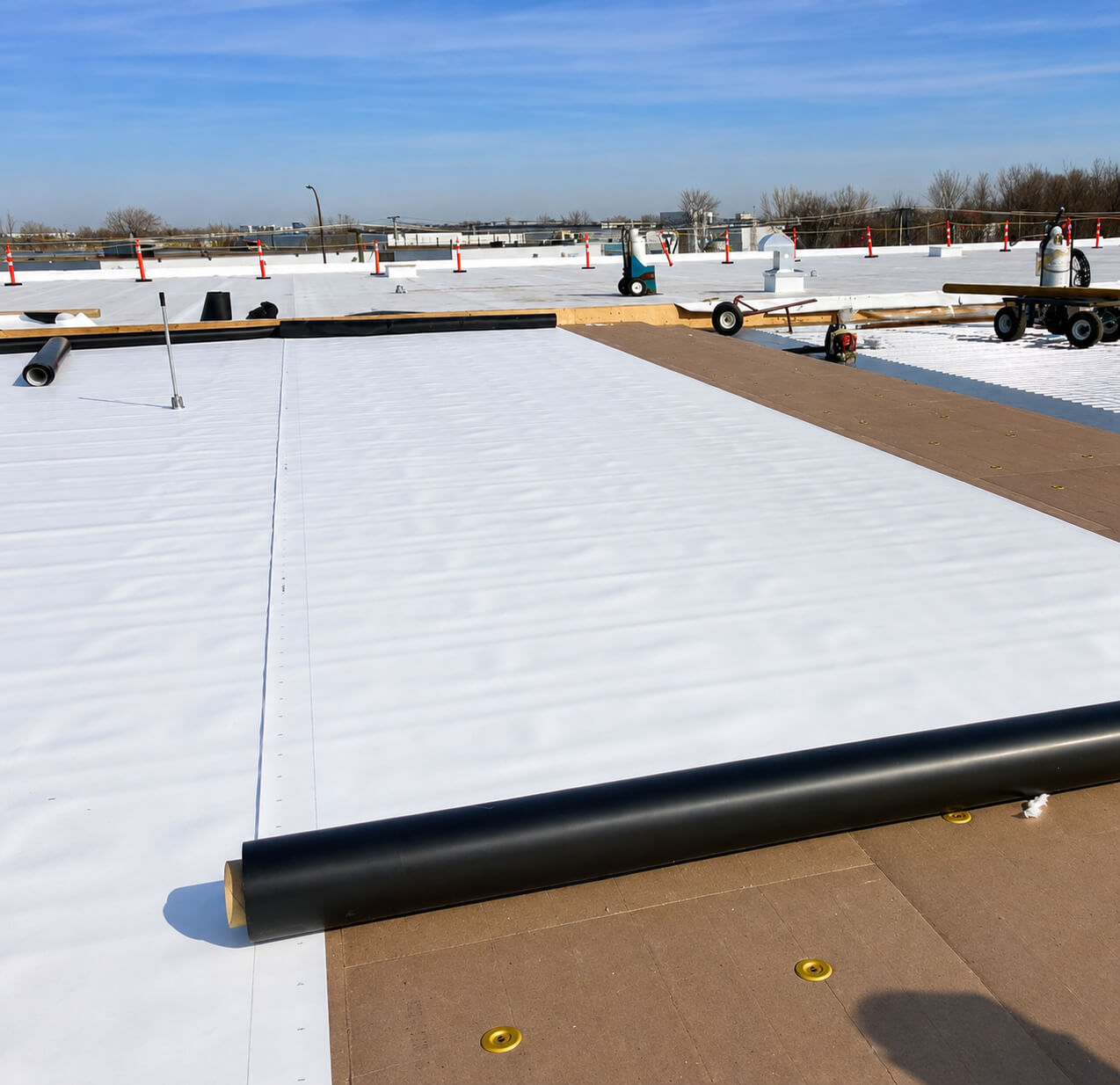
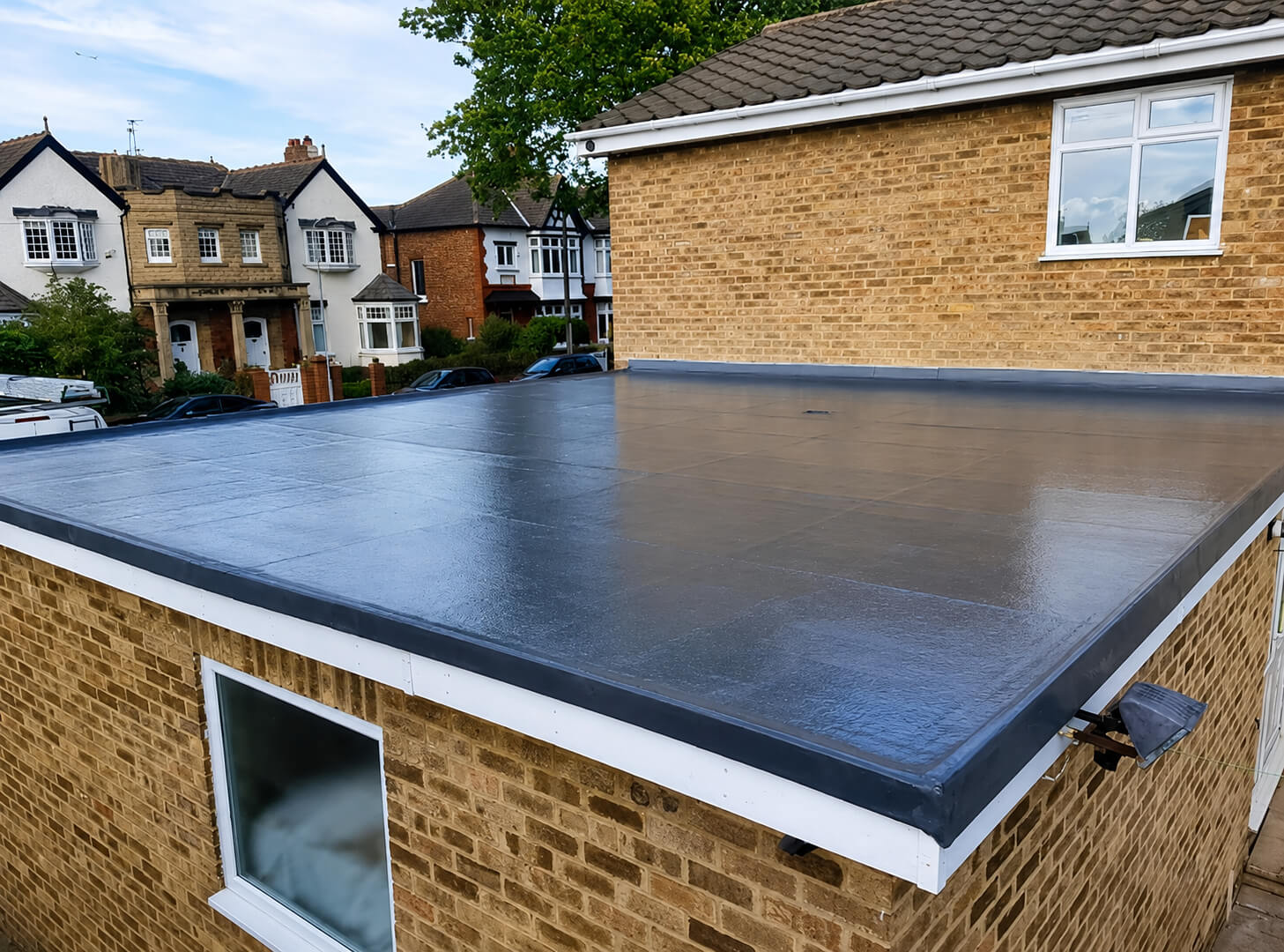
Thermoplastic polyolefin (TPO) uses reinforced, single-ply membrane sheets with heat-welded seams. These welds create strong, continuous connections that help limit water intrusion around seams, penetrations, and roof edges. TPO commonly comes in white or light-colored membranes, which can reflect sunlight and reduce heat absorption during North Carolina summers.
We install TPO on suitable residential and commercial roofs after checking the deck, insulation, drainage, and existing membrane. The system works well for buildings that need energy-conscious performance and durable seam protection. We pay close attention to flashing around HVAC equipment, skylights, vents, parapets, and wall transitions.
Our manufacturer-certified installers follow product specifications for membrane thickness, attachment, and flashing.
EPDM Rubber Roofing
EPDM is a synthetic rubber membrane valued for flexibility and weather resistance. Its ability to expand and contract helps it accommodate temperature changes, while properly sealed seams and flashing protect the roof deck from water. Black EPDM absorbs more solar heat, while white or coated options can provide a more reflective surface.
We evaluate the roof slope, drainage paths, penetrations, and substrate before recommending EPDM. The membrane can suit many low-slope roofs, including additions, garages, retail buildings, and other structures with broad roof areas. We secure or adhere the membrane according to the roof design and manufacturer requirements.
Regular inspections help identify punctures, open seams, damaged flashing, and standing-water concerns early. Our team provides honest assessments, clear repair recommendations, and maintenance guidance without proposing replacement when a practical repair can address the issue.
Modified Bitumen Roofing
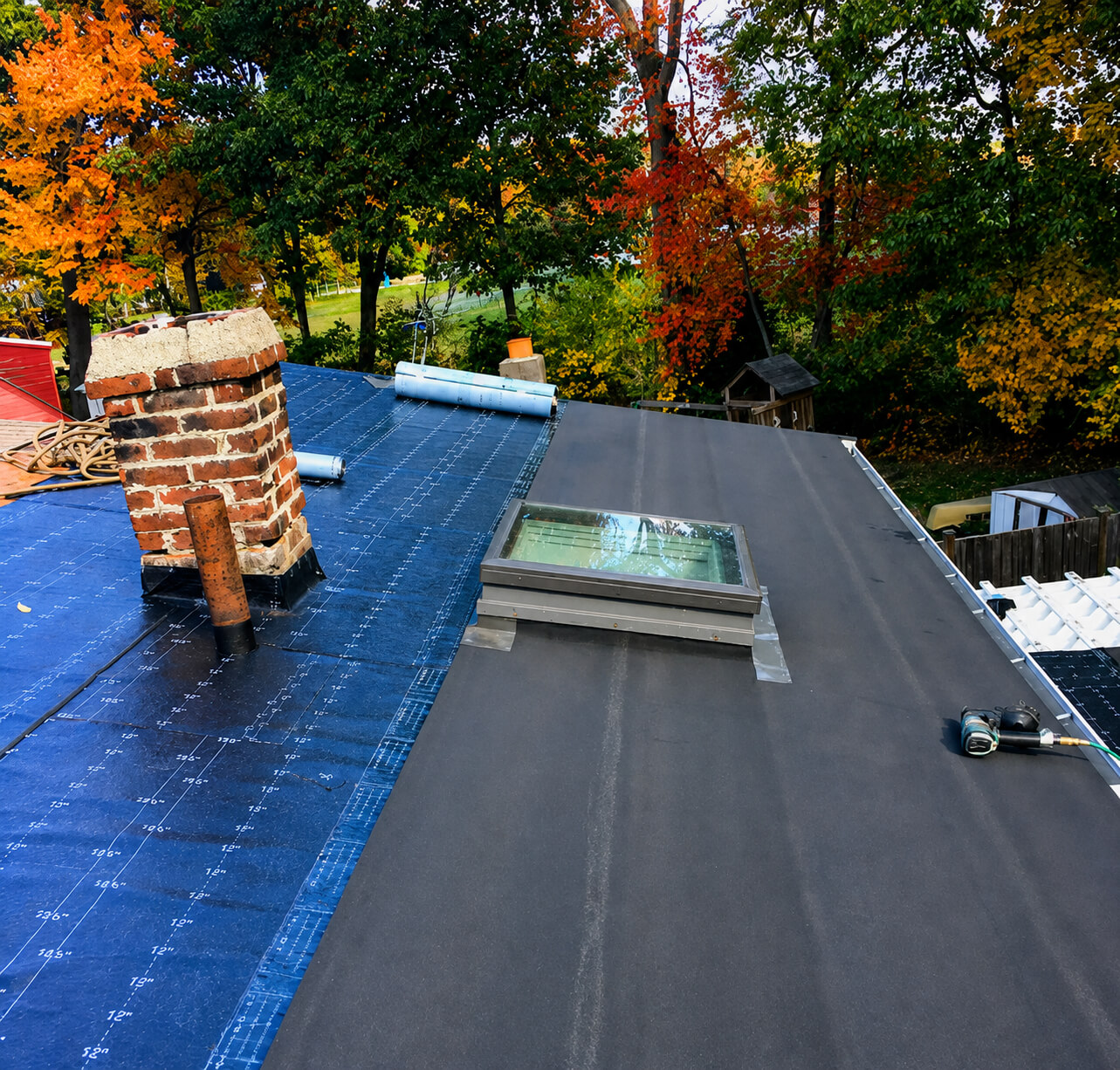
Modified bitumen combines asphalt with polymer modifiers to improve flexibility and resistance to movement. The membrane typically uses reinforced sheets installed in one or more layers, creating a durable surface for low-slope applications. Available installation methods include self-adhered, cold-applied, and manufacturer-approved heat-welded systems.
We select the application method based on the building, existing materials, ventilation, weather conditions, and safety requirements. Modified bitumen can provide strong protection around roof edges, penetrations, drains, and transitions when installers prepare and seal those areas correctly.
Before installation, we inspect the deck for rot, moisture damage, inadequate slope, and weak attachment points. We replace damaged materials as needed and install compatible base sheets, cap sheets, flashings, and drainage components.
Built-Up Roofing
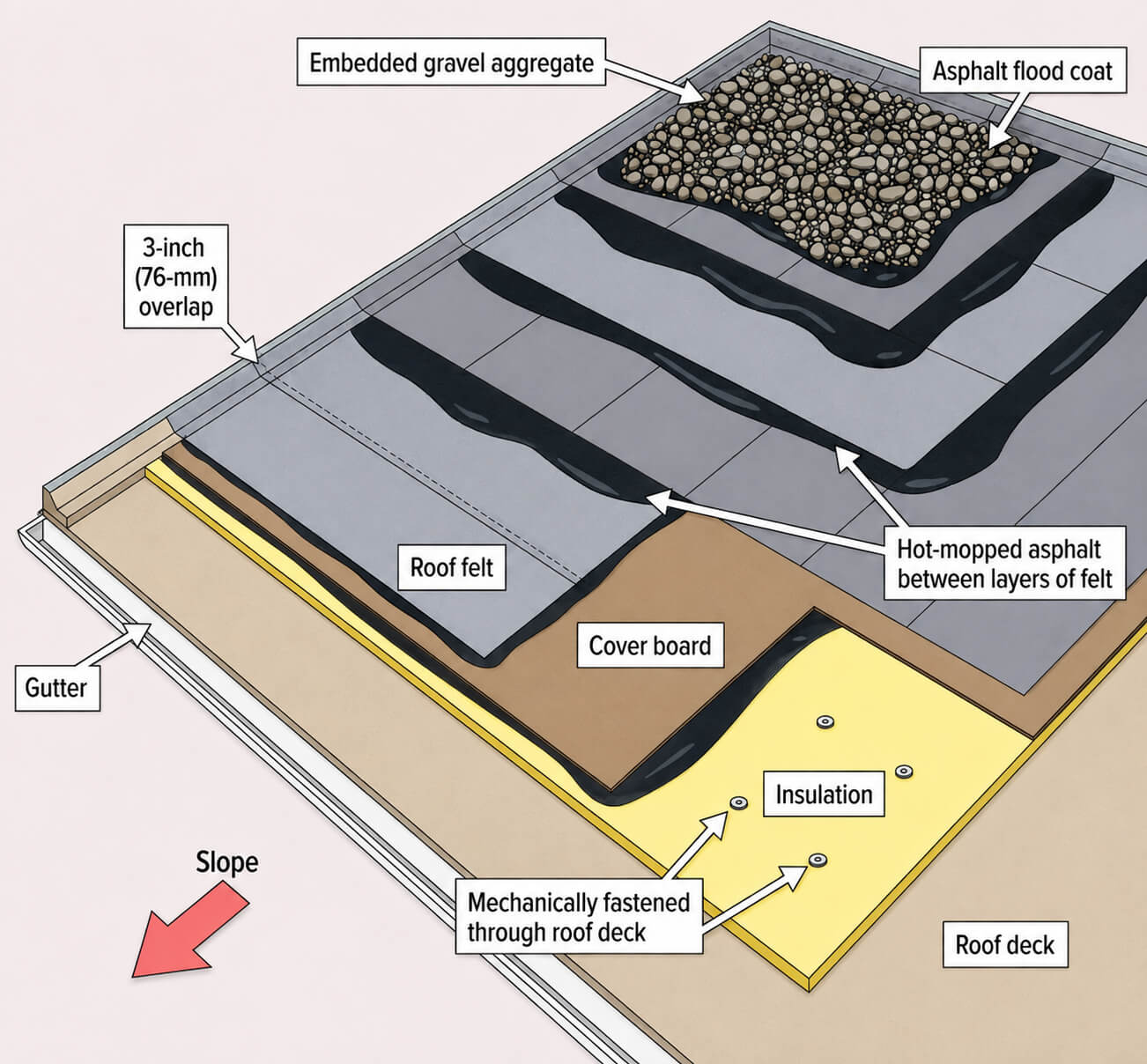
Built-up roofing (BUR) uses multiple layers of asphalt-saturated felts or fiberglass reinforcements with asphalt and a protective surface. The layered design creates redundancy, so the system can continue protecting the structure when minor surface wear affects one component. BUR remains a practical option for some commercial and institutional buildings with low-slope roofs.
We review the roof deck, insulation, drainage, penetrations, and existing membrane before designing the assembly. Proper flashing at parapet walls, drains, curbs, and equipment supports remains essential because these locations receive concentrated water movement and mechanical stress.
Our team coordinates material selection and installation with the building’s use, access requirements, and safety conditions. We can discuss repair, restoration, or full replacement when the existing BUR has leaks, blistering, exposed reinforcement, deteriorated flashing, or widespread moisture damage.
Flat Roof Leak Detection & Repair
Flat Roof Leak Repair
We begin flat roof leak repair with an inspection of the membrane, seams, roof penetrations, edge metal, drains, and flashing to locate the source of water intrusion. A visible ceiling stain may be several feet away from the actual entry point because water can travel beneath roofing materials before reaching the interior.
Our repair methods depend on the roofing system and the source of the leak. We may reseal open seams, patch membrane punctures, replace damaged flashing, repair seals around pipes and other penetrations, or restore membrane sections around HVAC equipment and skylights. We document affected areas and explain whether a targeted repair or broader replacement offers better long-term value.
Golden Roofing is locally owned and operated, licensed, bonded, and fully insured. Our manufacturer-certified installers use premium roofing materials and follow applicable manufacturer specifications when completing repairs. Emergency flat roof repair is also available when active leaks threaten insulation, drywall, electrical fixtures, inventory, equipment, or finished interior spaces.
Ponding Water & Drainage Problems
Ponding water can place additional stress on a flat roofing system, accelerate membrane deterioration, weaken seams and flashing, and increase the risk of moisture intrusion. Recurring standing water may also indicate problems with roof slope, drainage components, insulation, or the underlying structure.
We inspect roof drains, scuppers, gutters, downspouts, tapered insulation, and low areas where water collects. Our team also checks for clogged drainage paths, damaged drain assemblies, deteriorated flashing, compressed insulation, and structural deflection that can create depressions across the roof surface.
Depending on the condition of the roof, repairs may include clearing drainage components, repairing drains and flashing, correcting localized low areas, or installing tapered insulation as part of a larger roof replacement. For recurring ponding water, we address the underlying drainage issue and recommend solutions based on the condition and expected service life of the existing roofing system.
Signs Your Flat Roof Needs Repair or Replacement
Schedule a flat roof inspection if you notice recurring leaks, bubbling or blistered membranes, separated seams, cracked coatings, loose edge metal, damaged flashing, or areas of wet insulation. Inside the building, water stains, peeling paint, musty odors, damp ceiling materials, or recurring water damage after heavy rain can indicate moisture intrusion from the roofing system.
Flat roof replacement may be recommended when deterioration extends across large sections of the roof, insulation is saturated, the membrane is approaching the end of its service life, or recurring repairs are no longer providing a reliable solution. Widespread ponding water, structural movement, deteriorated perimeter details, and extensive membrane damage can also indicate the need for a more comprehensive solution.
During our inspection, we evaluate the age and condition of the roofing system, membrane and insulation, drainage, previous repairs, building use, and warranty requirements to determine whether repair or replacement provides better long-term value.
Metal Roof Colors, Coatings & Finishes
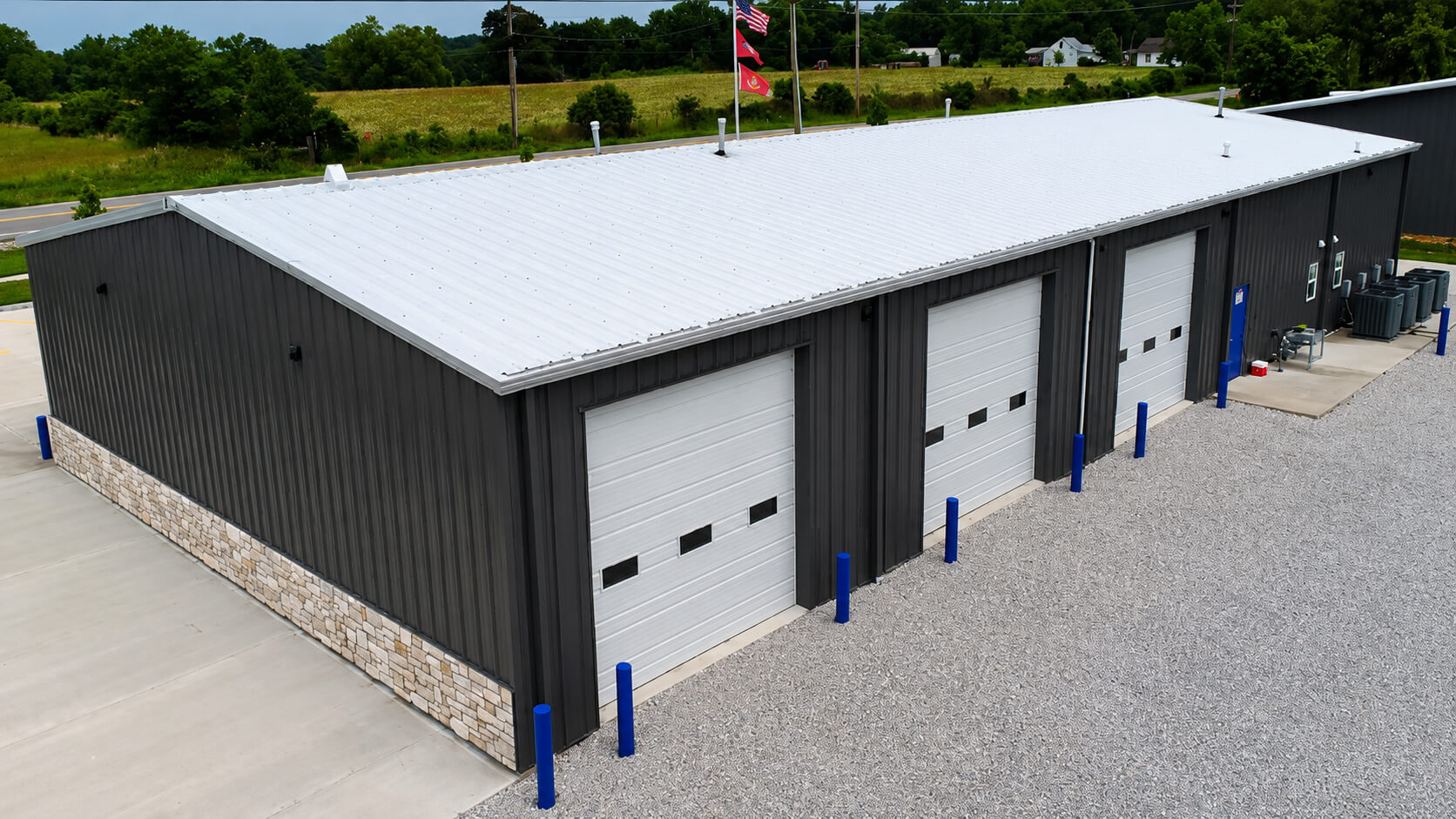
Metal roofing can be used for many low-slope roofing applications when the panel system, seams, slope, and drainage are properly designed. We inspect existing metal roofs for loose or damaged panels, failing fasteners, deteriorated flashing, oxidation, open seams, and vulnerable roof penetrations before recommending repair, a protective coating, or replacement.
Metal roofing systems are available in a range of panel profiles, finishes, and colors, including white, gray, bronze, green, and darker neutral shades. Reflective and light-colored finishes can help reduce solar heat absorption, while proper insulation and roof design contribute to the building’s overall thermal performance.
For suitable existing systems, roof coatings can provide an additional layer of protection against moisture, UV exposure, corrosion, and weathering while extending the service life of the metal roof. Before application, we evaluate the condition of the panels and underlying roof, prepare the surface, address necessary repairs, and confirm compatibility with the selected coating system. If extensive corrosion, structural damage, or drainage problems make restoration impractical, we can recommend replacement options instead.
Flat Roof Drainage & Waterproofing
Roof Drains, Scuppers & Gutters
Internal roof drains collect water through strainers and connected piping, while scuppers direct water through openings in parapet walls. Depending on the roof design, gutters and downspouts may also be used along roof edges to collect runoff and direct water safely away from the building.
Ponding water can add weight to the roofing system, accelerate membrane deterioration, and leave seams, flashing, and other vulnerable areas exposed to moisture for extended periods. We inspect and clear blocked strainers, repair damaged drain assemblies, address deteriorated flashing, and check gutters and downspouts for proper drainage. Emergency overflow scuppers provide an additional drainage path when primary roof drains become overwhelmed or clogged during heavy rainfall.
Flashing, Seams & Roof Penetrations
Water intrusion often develops around roof transitions, flashing, seams, and penetrations rather than across the main membrane surface. We inspect perimeter metal, wall flashing, coping, parapets, expansion joints, pipe boots, HVAC curbs, skylights, and other roof penetrations for gaps, corrosion, lifting, failed seals, and membrane separation.
For membrane roofing systems, we repair open seams using compatible adhesives, heat-welded membrane materials, or manufacturer-approved repair products based on the existing roof system. We can also replace deteriorated pipe boots and repair seals around fasteners, curbs, flashing, and perimeter details. Proper surface preparation is an important part of these repairs, including removing contaminants, drying affected areas, preparing the existing membrane, and following product-specific application and cure requirements.
Flat Roof Inspections & Preventive Maintenance
We inspect flat and low-slope roofing systems for early signs of membrane deterioration, moisture intrusion, drainage problems, and failing roof components that can lead to more extensive repairs. Our team evaluates the membrane, seams, flashing, drains, scuppers, penetrations, perimeter details, and areas surrounding rooftop equipment.
Zebulon’s humid subtropical climate exposes flat roofs to heavy rainfall, summer heat, UV exposure, and seasonal storms. Routine inspections can identify developing problems after severe weather and help address normal wear before moisture reaches the insulation or roof deck.
Our flat roof inspection may include:
Surface and membrane condition review
Drainage and ponding-water assessment
Flashing, coping, and perimeter inspection
Seams, sealants, and roof penetration checks
Inspection around HVAC curbs and rooftop equipment
Interior checks for visible signs of moisture
Photographs and maintenance recommendations
Preventive maintenance may include clearing roof drains and scuppers, renewing deteriorated sealants, repairing membrane damage, securing flashing, and addressing vulnerable penetrations or seams. These smaller repairs can help preserve the existing roofing system and reduce the risk of leaks and premature replacement.
If we identify damage, we explain the affected areas, recommended repairs, and expected maintenance needs. When deterioration is too extensive for practical repair, we can also provide replacement options based on the condition and remaining service life of the roofing system.
Proudly Serving Other Areas
Golden Roofing provides flat roof installation, replacement, repair, and maintenance throughout Zebulon and surrounding communities in Wake, Johnston, Nash, and nearby counties.
Our service area includes:
Wendell
Knightdale
Rolesville
Wake Forest
Archer Lodge
Clayton
Middlesex
Bailey
Smithfield
Selma
Garner
Raleigh

Frequently Asked Questions
What flat roofing systems does Golden Roofing install and repair in Zebulon, NC?
We install and repair TPO, EPDM, PVC, modified bitumen, and built-up roofing systems for residential and commercial properties. We also service low-slope roof sections around walls, parapets, skylights, drains, HVAC equipment, and other roof penetrations.
Our team selects compatible membranes, insulation, adhesives, flashing, and drainage components based on the existing roof assembly, building requirements, and manufacturer specifications.
How can I tell whether my flat roof needs repair or replacement?
A targeted repair may be appropriate for an isolated puncture, separated seam, damaged flashing, leaking penetration, or localized membrane deterioration. More extensive repairs may also be possible when the roof deck and insulation remain in good condition.
Flat roof replacement becomes more likely when there are widespread or recurring leaks, saturated insulation, extensive membrane deterioration, damaged decking, or an aging system that can no longer be repaired reliably. We inspect the roofing assembly and explain the available options before recommending replacement.
What are the most common causes of flat roof leaks in Zebulon?
Common causes include ponding water, separated membrane seams, punctures, deteriorated flashing, clogged drains and scuppers, damaged pipe boots, and failed seals around roof penetrations. Wind-driven rain and storm debris can also damage vulnerable areas of a flat roofing system.
During a leak inspection, we evaluate the membrane, seams, drains, flashing, edge metal, rooftop equipment, and penetrations to locate potential sources of water intrusion.
How long does flat roof installation or replacement take?
Project length depends on the size and condition of the roof, roofing material, accessibility, tear-off requirements, insulation and decking repairs, rooftop equipment, weather, and permitting. Smaller flat roofing projects may be completed within several days, while larger or more complex installations can require additional time.
Before work begins, we review the project scope and anticipated schedule and communicate any changes that arise during installation.
Which flat roof materials offer the best durability, drainage performance, and energy efficiency?
The best flat roofing system depends on the building, roof design, budget, and long-term performance requirements. TPO and PVC offer reflective surfaces and heat-welded seams, while EPDM provides a flexible rubber membrane with a long history of use on low-slope roofs. Modified bitumen and built-up roofing use layered assemblies that provide additional durability and puncture resistance.
We also consider drainage, insulation, foot traffic, rooftop equipment, sun exposure, and the existing roof assembly when recommending a system.
Does Golden Roofing provide flat roof inspections and free estimates in Zebulon?
Yes. Golden Roofing provides flat roof inspections and free estimates for repair, replacement, and installation in Zebulon, NC. We evaluate visible membrane damage, seams, flashing, drainage, roof penetrations, and signs of moisture intrusion before explaining the recommended work.



Quick Links
Contact Info
Phone: 984-207-1118
Email: [email protected]
Hours
Monday - Friday: 8am - 8pm
Saturday - 8am - 6pm
Sunday - Closed
Quick Links
Contact Info
Phone:
984-207-1118
Email:
Hours:
Monday - Friday: 8am - 8pm
Saturday: 8am- 6pm
Sunday: Closed