



Seamless Gutter Installation, Replacement & Repair in Zebulon, NC: Golden Roofing
Seamless Gutter Installation, Replacement & Repair in Zebulon, NC: Golden Roofing
At Golden Roofing, we provide professional seamless gutter installation, replacement, and repair for residential and commercial properties in Zebulon, NC, backed by more than 15 years of local experience. Our custom seamless gutter systems are designed to efficiently manage roof runoff, reduce potential leak points, and direct water away from roof edges, fascia, siding, foundations, walkways, and landscaping during North Carolina’s heavy rain and storm conditions.
Our licensed, bonded, and fully insured team evaluates the entire drainage system, including existing gutters, roof size and pitch, concentrated runoff from valleys, fascia condition, downspout placement, and ground-level drainage. We install and service seamless gutters, downspouts, gutter guards, and related roof-edge components, with gutter sizes, materials, and layouts selected for the specific property. Residential and commercial customers receive clear recommendations, free estimates, clean job sites, emergency service when needed, and dependable protection backed by our 25-year workmanship warranty and applicable manufacturer warranties.
Seamless Gutter Installation, Replacement & Repair in Zebulon, NC: Golden Roofing
At Golden Roofing, we provide professional seamless gutter installation, replacement, and repair for residential and commercial properties in Zebulon, NC, backed by more than 15 years of local experience. Our custom seamless gutter systems are designed to efficiently manage roof runoff, reduce potential leak points, and direct water away from roof edges, fascia, siding, foundations, walkways, and landscaping during North Carolina’s heavy rain and storm conditions.
Our licensed, bonded, and fully insured team evaluates the entire drainage system, including existing gutters, roof size and pitch, concentrated runoff from valleys, fascia condition, downspout placement, and ground-level drainage. We install and service seamless gutters, downspouts, gutter guards, and related roof-edge components, with gutter sizes, materials, and layouts selected for the specific property. Residential and commercial customers receive clear recommendations, free estimates, clean job sites, emergency service when needed, and dependable protection backed by our 5-year workmanship warranty and applicable manufacturer warranties.
Seamless Gutter Installation, Replacement & Repair Services
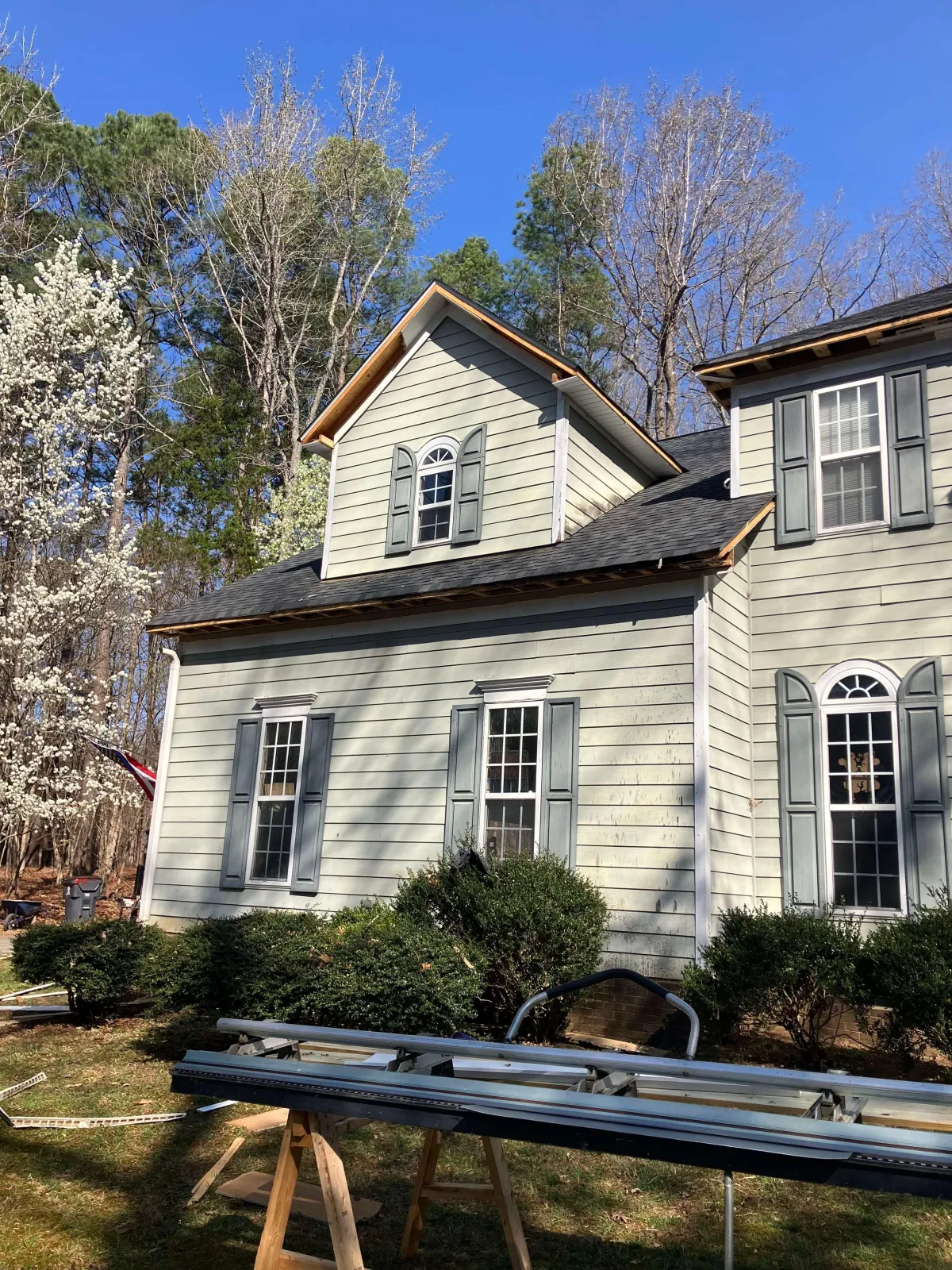
Seamless Gutter Installation
We install custom seamless gutter systems for new construction, additions, roof replacements, and properties that need better runoff control. Each gutter run is formed on site to fit the roofline, creating longer continuous sections with fewer joints than traditional sectional gutters.
Gutter size, pitch, hanger placement, and downspout locations are planned around the roof area and the way water concentrates along slopes and valleys. Before installation, we also check fascia and attachment areas for deterioration that could affect the stability of the new system.
Available materials, gutter sizes, downspouts, and gutter protection can be selected according to the building's drainage requirements, exterior design, and surrounding tree coverage.
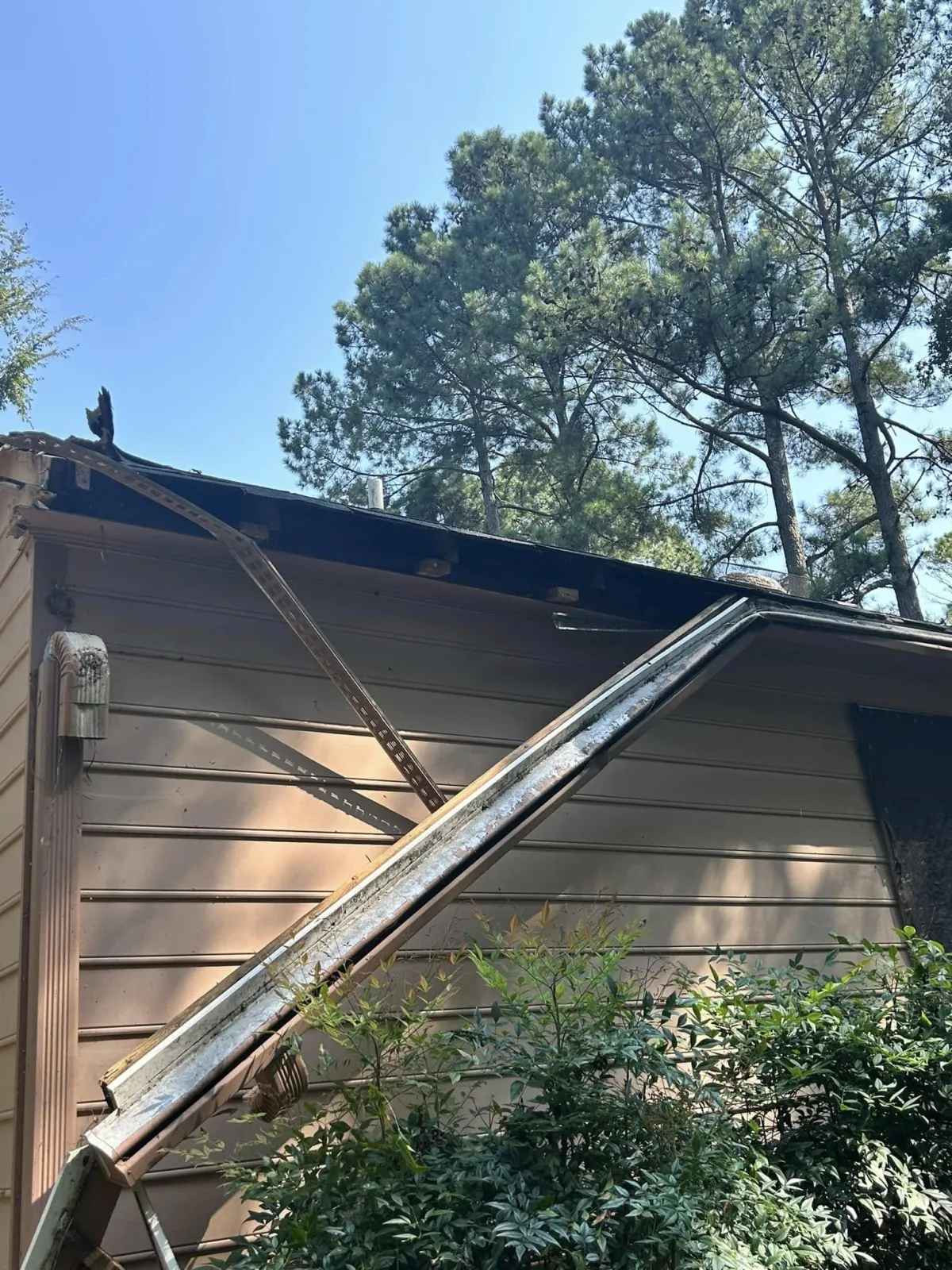
Seamless Gutter Replacement
Replacement may be the better option when corrosion, cracking, sagging, separation, recurring leaks, storm damage, or improper sizing affects a significant portion of the existing system. Instead of replacing only the most visible damaged section, we determine whether problems with pitch, capacity, downspouts, or attachment points are contributing to repeated failure.
Existing gutters are removed as needed so the fascia and roof edge can be evaluated before the new system is installed. The replacement system can then be configured with the appropriate gutter size, material, downspout capacity, and discharge locations for the property.
When gutters are damaged by severe weather, we can also document visible conditions and coordinate gutter replacement with related roof or exterior repairs.
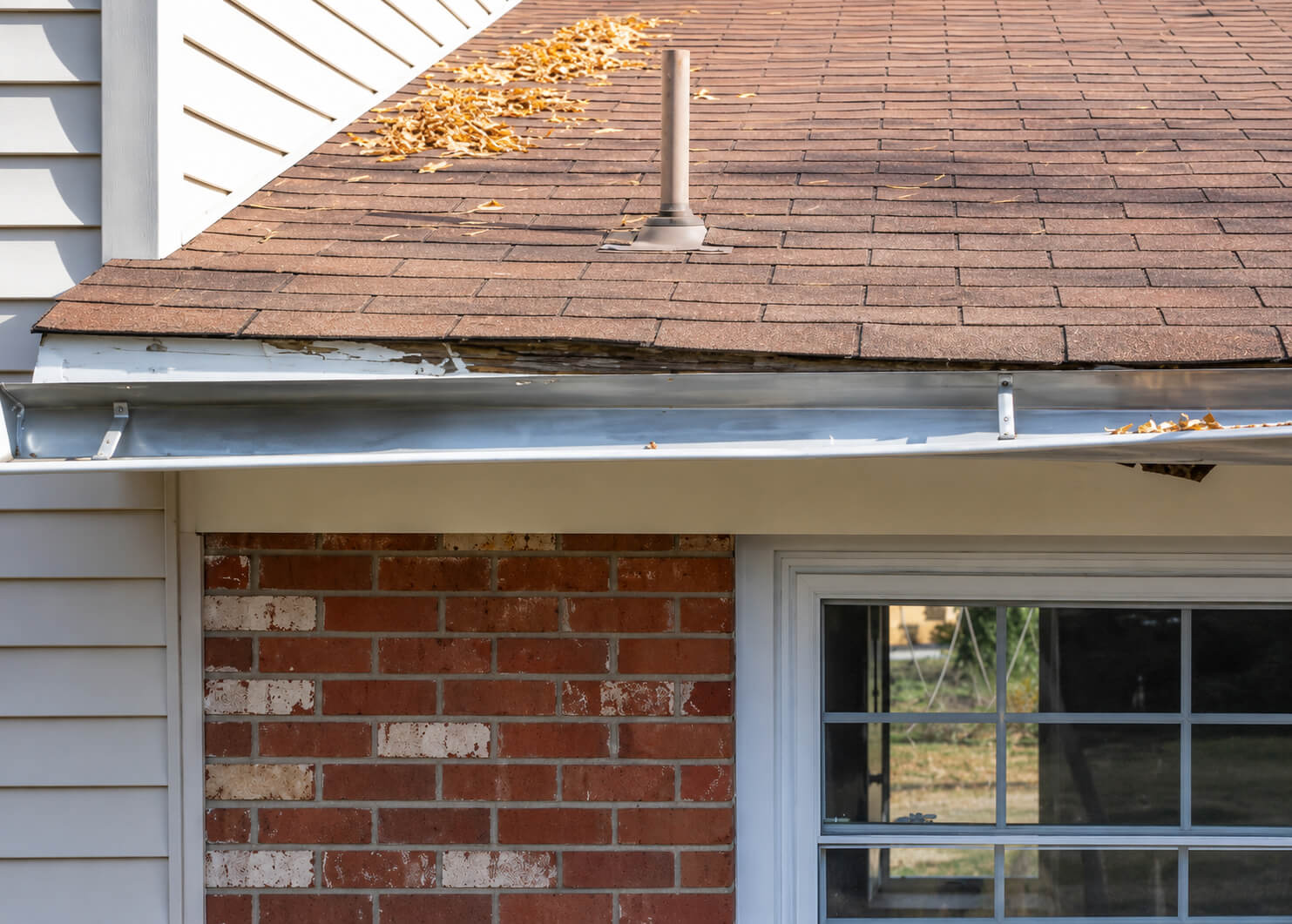
Gutter Repair
Localized gutter repair can extend the life of a system that remains structurally sound. Common repairs include loose hangers, leaking corners or joints, separated downspouts, damaged outlets, minor dents, and sections that have shifted out of proper alignment.
Before repairing the visible problem, we determine whether it was caused by debris, concentrated roof runoff, insufficient downspout capacity, deteriorated attachment points, or another drainage issue. Service may include resealing suitable connections, replacing damaged hardware, reconnecting downspouts, correcting alignment, or repairing isolated sections.
When deterioration or failure affects much of the system, we explain why replacement may provide a more reliable long-term solution rather than continuing to make repeated repairs.
Localized gutter repair can extend the life of a system that remains structurally sound. Common repairs include loose hangers, leaking corners or joints, separated downspouts, damaged outlets, minor dents, and sections that have shifted out of proper alignment.
Before repairing the visible problem, we determine whether it was caused by debris, concentrated roof runoff, insufficient downspout capacity, deteriorated attachment points, or another drainage issue. Service may include resealing suitable connections, replacing damaged hardware, reconnecting downspouts, correcting alignment, or repairing isolated sections.
When deterioration or failure affects much of the system, we explain why replacement may provide a more reliable long-term solution rather than continuing to make repeated repairs.
Residential Seamless Gutter Systems
Custom Gutters Designed for Your Home
Seamless gutters are fabricated to follow the individual roofline, but sizing and layout are equally important. A roof with steep slopes, multiple valleys, or large surface areas can concentrate substantial amounts of water into specific sections during heavy rain. We account for these conditions when determining gutter size, outlet locations, downspout capacity, and hanger placement.
Homeowners can choose from available gutter materials, profiles, sizes, downspouts, and gutter protection systems based on the home's architecture and maintenance needs. Because Golden Roofing also works with roofing and exterior components, gutter projects can be coordinated with roof, fascia, soffit, and related roof-edge repairs when necessary.
Managing Water Around the Home
Gutters and downspouts work together to move roof runoff toward controlled discharge areas instead of allowing it to repeatedly spill beside the structure.
Proper drainage can help limit moisture exposure around fascia, soffits, siding, windows, foundations, crawl spaces, walkways, and landscaping. Depending on the property, downspout extensions, splash blocks, or other drainage measures may be used to move discharge farther from the foundation.
Homes surrounded by mature trees may also benefit from gutter protection to reduce the accumulation of leaves, pine needles, and other debris. These systems can reduce maintenance requirements, although periodic gutter and downspout inspections are still recommended.
Commercial Seamless Gutter Systems
Commercial Gutter Installation & Replacement
We install and replace seamless gutter systems for offices, retail buildings, warehouses, multifamily properties, churches, and other commercial facilities. Before recommending a system, we evaluate roof dimensions, drainage paths, roof-edge construction, attachment areas, existing outlets, and available discharge locations.
Material, profile, and capacity are selected according to the building rather than using a standard residential configuration. Larger properties may benefit from 6-inch or other high-capacity gutter systems, larger downspouts, additional outlets, or commercial gutter profiles when calculations and site conditions support them.
Commercial projects can also be coordinated with roof-edge, fascia, or storm-related repairs when multiple exterior components require attention.
We install and replace seamless gutter systems for offices, retail buildings, warehouses, multifamily properties, churches, and other commercial facilities. Before recommending a system, we evaluate roof dimensions, drainage paths, roof-edge construction, attachment areas, existing outlets, and available discharge locations.
Material, profile, and capacity are selected according to the building rather than using a standard residential configuration. Larger properties may benefit from 6-inch or other high-capacity gutter systems, larger downspouts, additional outlets, or commercial gutter profiles when calculations and site conditions support them.
Commercial projects can also be coordinated with roof-edge, fascia, or storm-related repairs when multiple exterior components require attention.
High-Capacity Gutters & Commercial Drainage
During heavy North Carolina rainfall, broad roof surfaces can concentrate large volumes of runoff into gutters and downspouts in a short period. Effective commercial drainage therefore depends on the relationship between gutter capacity, slope, outlet quantity, downspout size, and discharge location.
We evaluate overflow patterns, blocked outlets, sagging runs, damaged attachment points, undersized downspouts, and areas where discharge collects beside the building. Particular attention can be given to entrances, pedestrian areas, loading zones, foundations, landscaping, and other locations where uncontrolled runoff can create problems.
Depending on the property, drainage improvements may include larger downspouts, additional outlets, extensions, splash blocks, or connections to an appropriate existing drainage system. Gutter protection may also be considered for buildings exposed to significant leaf and tree debris.
During heavy North Carolina rainfall, broad roof surfaces can concentrate large volumes of runoff into gutters and downspouts in a short period. Effective commercial drainage therefore depends on the relationship between gutter capacity, slope, outlet quantity, downspout size, and discharge location.
We evaluate overflow patterns, blocked outlets, sagging runs, damaged attachment points, undersized downspouts, and areas where discharge collects beside the building. Particular attention can be given to entrances, pedestrian areas, loading zones, foundations, landscaping, and other locations where uncontrolled runoff can create problems.
Depending on the property, drainage improvements may include larger downspouts, additional outlets, extensions, splash blocks, or connections to an appropriate existing drainage system. Gutter protection may also be considered for buildings exposed to significant leaf and tree debris.
Seamless Gutter Materials & Options
Aluminum
Aluminum seamless gutters are a versatile choice for residential and commercial properties because they combine corrosion resistance, relatively low weight, and a wide range of color and finish options. Each gutter run is custom-formed on site to match the roofline, minimizing joints along straight sections and creating a clean, continuous appearance.
We size the system according to roof area, pitch, valleys, runoff volume, and downspout capacity rather than relying on a standard configuration for every building. Five-inch gutters are common on many homes, while 6-inch gutters and larger downspouts may be better suited to larger roof surfaces or areas where valleys concentrate significant amounts of rainwater.
Aluminum also coordinates easily with roofing, siding, fascia, and exterior trim. Because the material is lighter and more susceptible to denting than steel, we consider surrounding trees, falling branches, ladder access, and other potential impact exposure when recommending a system. Properly spaced hangers, compatible fasteners, sealed end caps, outlets, and correctly positioned downspouts complete the installation.
Copper
Copper gutters combine functional drainage with an architectural finish that works especially well on historic homes, custom residences, churches, and commercial buildings where exterior details are an important part of the property. New copper begins with a bright metallic appearance before gradually developing brown and bronze tones and, over time, a blue-green patina as the surface naturally reacts with the environment.
Unlike painted gutter materials, copper does not rely on a surface coating for corrosion protection. However, proper material compatibility is especially important. We consider hangers, fasteners, outlets, downspouts, flashing, roof-edge metals, and other nearby components to reduce the potential for galvanic corrosion between dissimilar metals.
Copper has a higher initial cost than aluminum or galvanized steel, making it most appropriate when appearance, architectural character, and long-term material performance justify the investment. Before installation or replacement, we evaluate the roofline, fascia, drainage requirements, and existing copper components so the new work integrates properly with the building.
Steel
Steel gutters offer greater rigidity and impact resistance than aluminum, making them worth considering for commercial buildings, larger rooflines, and properties where gutters may experience greater physical exposure. Galvanized steel uses a protective zinc coating to help resist corrosion, while factory-coated steel systems can provide additional surface protection and exterior color options.
Because steel is heavier than aluminum, the condition of the fascia, mounting surface, hangers, and attachment points becomes particularly important. We evaluate these components along with roof area, pitch, valleys, and runoff concentration before determining gutter size and fastening requirements.
Steel can also be useful where large volumes of water need to be managed through high-capacity gutters and downspouts. Outlet locations and discharge points can be planned around entrances, sidewalks, loading areas, foundations, landscaping, and other areas where uncontrolled runoff could create problems. Because scratches or damage to protective finishes can expose the underlying metal, periodic inspection and coating maintenance can help identify corrosion before it becomes more extensive.
Gutter Styles & Sizes
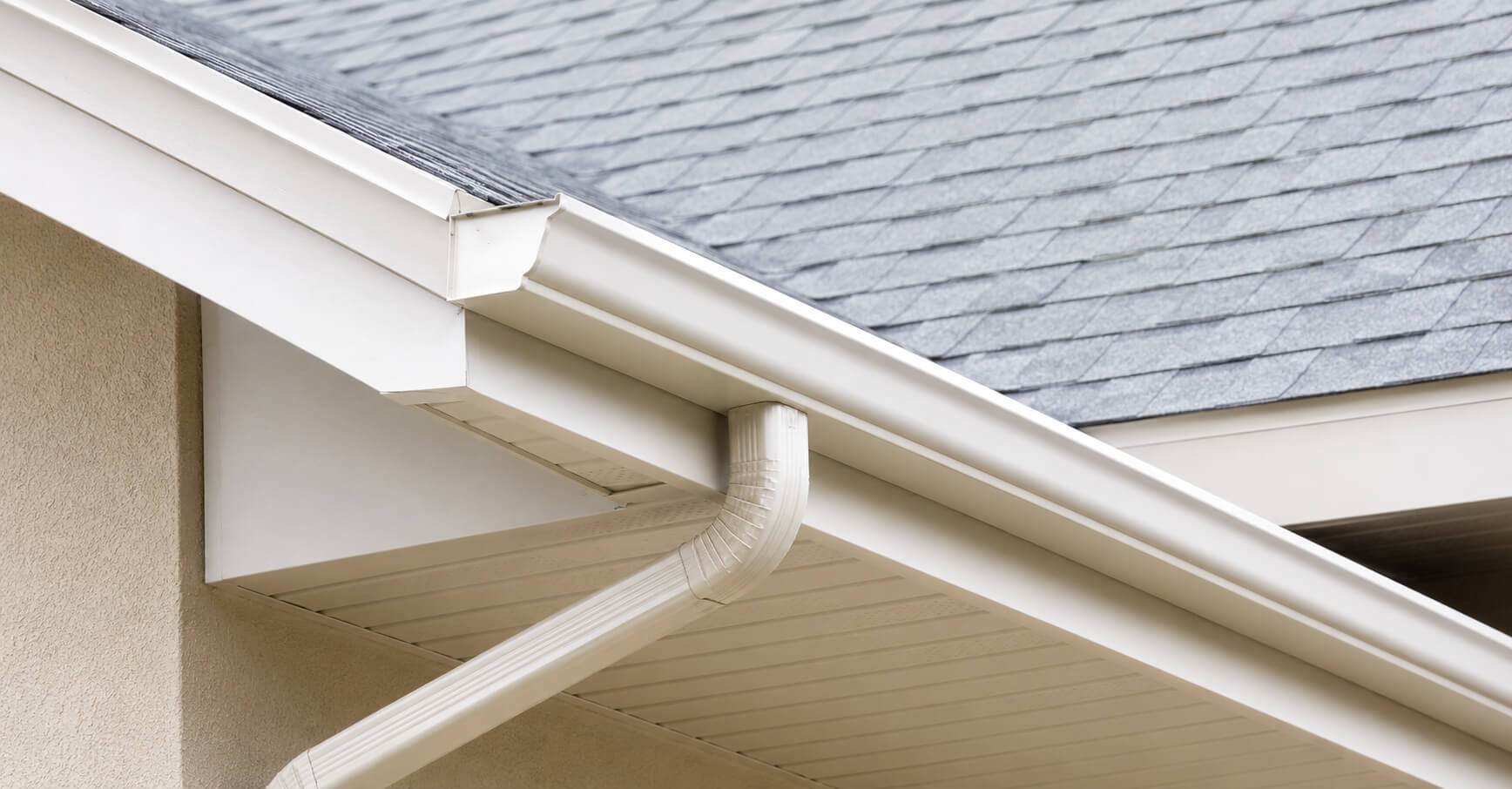
K-Style Gutters
K-style gutters are widely used on residential and commercial properties because their flat back integrates neatly with fascia boards, while the formed front creates a profile similar to decorative exterior trim. Their shape also provides substantial water-carrying capacity without requiring an unusually large profile along the roofline.
We fabricate seamless K-style gutters to the measured dimensions of the building, minimizing joints along straight runs. 5-inch K-style gutters are suitable for many residential applications, while 6-inch systems provide greater capacity for larger roof areas, steeper pitches, and sections receiving concentrated runoff from roof valleys.
Gutter capacity must also be coordinated with the outlets and downspouts. Increasing gutter size without providing adequate discharge capacity can still result in overflow during intense rainfall.
Half-Round Gutters
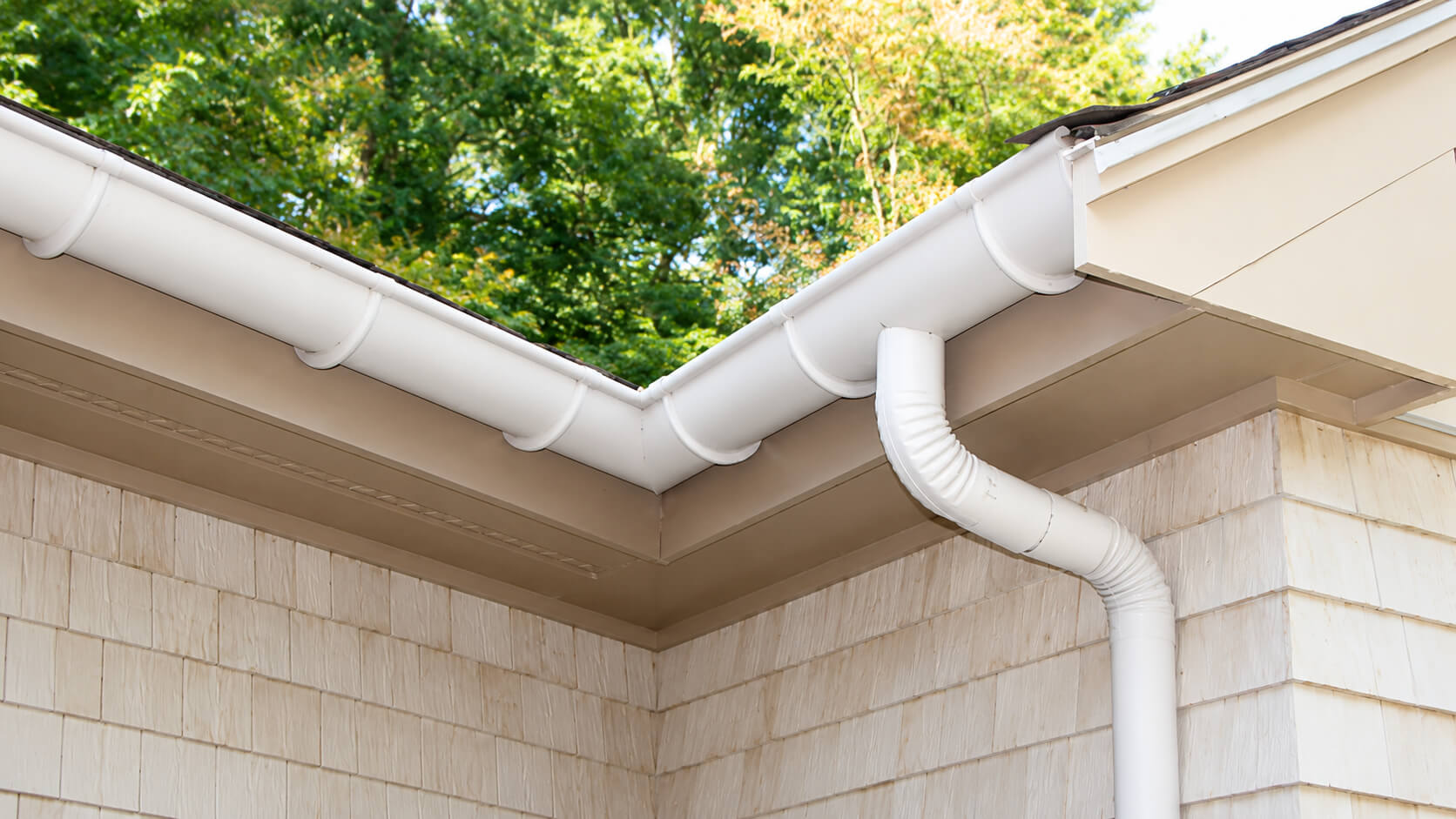
Half-round gutters feature a curved channel and rounded exterior that complements historic homes, custom residences, cottages, churches, and buildings with traditional architectural details. Their smooth interior also provides fewer corners where sediment and small debris can collect.
Unlike many K-style systems, half-round gutters are commonly supported with specialized brackets or hangers that become part of the system's appearance. We coordinate the gutter profile with compatible outlets, elbows, downspouts, brackets, and available gutter protection to create a consistent installation.
Proper sizing and pitch remain important with half-round systems. Roof area, slope, valleys, outlet locations, and downspout capacity all influence how effectively the system can move water during heavy rainfall.
Downspout Installation, Replacement & Drainage
Downspout Installation & Replacement
Downspouts that are undersized, damaged, clogged, disconnected, or poorly positioned can restrict an otherwise properly sized gutter system. We evaluate gutter outlets, roof drainage areas, existing downspout locations, attachment points, and ground-level discharge before recommending installation or replacement.
Depending on the property, downspout service may include:
Standard and larger-capacity downspouts
Additional downspouts for high-volume drainage areas
Outlets, elbows, connectors, and secure straps
Downspout extensions and splash blocks
Repair of loose, leaking, dented, or disconnected sections
Repositioning downspouts to improve discharge
Downspout capacity should correspond with the gutters feeding it. Larger gutters or roof sections receiving concentrated valley runoff may require larger outlets, additional downspouts, or greater downspout capacity to move water efficiently during heavy rainfall.
Directing Water Away From the Foundation
Moving water through the downspout is only part of the drainage system. The discharge point should carry runoff away from the building rather than concentrating it beside foundation walls, crawl spaces, entrances, walkways, or landscaped areas.
We evaluate property grading, soil conditions, paved surfaces, landscaping, existing drainage paths, and the distance between downspout outlets and the structure when determining where water should discharge. Depending on site conditions, extensions or splash blocks can help move runoff farther from the foundation and reduce erosion immediately below the outlet.
We also look for signs that existing discharge locations are not performing properly, including soil erosion, mulch displacement, standing water, foundation splashback, saturated areas, and water collecting near walkways or entrances. Where an existing underground drainage system is present, downspout connections should be evaluated for proper flow and a suitable outlet before directing additional roof runoff into it.
Gutter Guards & Leaf Protection Systems
Gutter guards and leaf protection systems can reduce the amount of leaves, pine needles, twigs, seed pods, and other roof debris entering gutters and downspouts. We evaluate the existing gutter system, surrounding tree coverage, roof pitch, valleys, and typical debris before recommending gutter protection for residential or commercial properties in Zebulon, NC.
Different guard designs manage debris and water differently. Depending on the property and available products, options may include screens, perforated covers, or micro-mesh gutter guards designed to allow roof runoff into the gutter while blocking larger debris. The appropriate system should work with the gutter's size, pitch, outlet capacity, and downspouts without unnecessarily restricting water flow during heavy rainfall.
Do Gutter Guards Prevent Clogged Gutters?
Gutter guards can reduce debris accumulation and cleaning frequency, but they do not make a gutter system maintenance-free. Fine particles, pollen, seed pods, pine needles, and shingle granules may collect on top of the guard or enter through small openings. Leaves and branches can also accumulate near roof valleys, where concentrated runoff carries more debris toward the gutter.
Periodic inspection remains important, particularly for properties surrounded by mature trees. Guard surfaces may need occasional cleaning, and gutters and downspouts should still be checked for sediment, restricted outlets, and proper drainage.
Before installing gutter protection, we evaluate the condition and performance of the existing system. Sagging gutters, improper pitch, damaged fascia, loose hangers, restricted downspouts, or inadequate capacity should be addressed first, since adding a guard will not correct an underlying drainage problem. The goal is to pair the appropriate leaf protection with a properly functioning gutter and downspout system.
Gutter guards can reduce debris accumulation and cleaning frequency, but they do not make a gutter system maintenance-free. Fine particles, pollen, seed pods, pine needles, and shingle granules may collect on top of the guard or enter through small openings. Leaves and branches can also accumulate near roof valleys, where concentrated runoff carries more debris toward the gutter.
Periodic inspection remains important, particularly for properties surrounded by mature trees. Guard surfaces may need occasional cleaning, and gutters and downspouts should still be checked for sediment, restricted outlets, and proper drainage.
Before installing gutter protection, we evaluate the condition and performance of the existing system. Sagging gutters, improper pitch, damaged fascia, loose hangers, restricted downspouts, or inadequate capacity should be addressed first, since adding a guard will not correct an underlying drainage problem. The goal is to pair the appropriate leaf protection with a properly functioning gutter and downspout system.
Fascia, Soffit & Roof Edge Problems Around Gutters
The gutter system is directly connected to several important roof-edge components, including the fascia, soffit, drip edge, roof decking, and rafter or truss ends. When gutters overflow, pull away from the building, or allow water to travel behind them, moisture can affect these surrounding materials as well as the gutter itself.
We inspect the entire roof-edge assembly when signs of deterioration are present. Identifying whether moisture is coming from gutter overflow, improper drainage, damaged flashing, roof-edge problems, or water traveling behind the gutter helps determine what should be repaired before a new system is installed.
Fascia Damage Behind Gutters
Fascia boards run along the roof edge, covering the ends of the rafters or roof trusses and commonly providing the mounting surface for gutter hangers. Because gutters are secured along this area, deteriorated fascia can compromise attachment strength and allow sections of the system to loosen or sag.
Moisture reaching the fascia may result from overflowing gutters, clogged outlets or downspouts, improper gutter positioning, roof-edge leaks, or water traveling behind the gutter instead of entering it. Over time, wood fascia may develop peeling paint, staining, swelling, soft spots, rot, or fasteners that no longer hold securely.
Before attaching replacement gutters, we check the fascia and mounting areas for deterioration. Damaged material should be repaired or replaced as necessary so hangers and fasteners are secured to a sound attachment surface rather than weakened wood.
Soffit & Roof Edge Water Damage
Soffits cover the underside of the roof overhang and, when vented, can form part of the attic's intake ventilation system. Water reaching this area can stain, warp, loosen, or deteriorate soffit panels and may also affect nearby rafter tails, fascia, sheathing, and exterior finishes.
Visible warning signs can include peeling paint, discoloration, swollen or sagging panels, deteriorated wood, damaged vents, or staining beneath the eaves. These symptoms do not necessarily mean the gutter itself is the source, which is why the surrounding roof edge should be evaluated rather than simply replacing the visibly damaged material.
We look for potential entry points around the gutter, roof covering, flashing, drip edge, and fascia to determine how water is reaching the area. Correcting the source first helps prevent new soffit or fascia materials from being exposed to the same moisture problem.
Drip Edge & Gutter Alignment
Drip edge flashing is installed along roof edges to help direct runoff away from vulnerable roof-edge materials and toward the gutter system at the eaves. For the components to work together correctly, the relationship between the roof covering, underlayment, drip edge, fascia, gutter, and hangers must be properly configured.
If a gutter sits too low, too far away from the roof edge, or out of alignment with the runoff path, water may overshoot the gutter or travel behind it. Problems with the drip edge or roof-edge flashing can also allow moisture to reach the fascia instead of entering the gutter.
During an inspection, we evaluate drip-edge condition and positioning, gutter height, slope, hanger attachment, outlets, and downspout capacity. We also look at roof valleys and other areas where concentrated runoff can place greater demand on a particular gutter section. When necessary, gutter positioning, outlet quantity, or downspout capacity can be adjusted so the roof edge and drainage system function together.
Common Signs You Need Gutter Repair or Replacement
Gutters Pulling Away From the House
A visible gap between the gutter and fascia can indicate loose or failed hangers, deteriorated fascia, excessive weight, storm damage, or weakened attachment points. Other warning signs include exposed fasteners, tilted gutter sections, or water running behind the gutter during rainfall.
Once a gutter begins pulling away, it may no longer maintain the proper position or slope needed to direct water toward the downspouts. The weight of standing water, wet leaves, pine needles, and other debris can place additional stress on the hangers and fascia.
We inspect both the gutter attachment system and the material behind it before making repairs. Sound fascia may allow loose sections to be resecured with appropriate hangers or fasteners. If the mounting surface is deteriorated or attachment failures occur throughout the system, fascia repair and gutter replacement may provide a more reliable solution.
Sagging or Improperly Pitched Gutters
Gutters require a controlled slope toward their outlets and downspouts. When hangers loosen or sections shift, low spots can develop that hold water and sediment instead of allowing the gutter to drain.
Common signs include an uneven gutter line, standing water after rainfall, sediment accumulation, organic growth, or overflow from areas that are not near a downspout. The additional weight of retained water and debris can place further stress on hangers and attachment points.
Minor alignment problems may be corrected by adjusting the pitch, replacing damaged hangers, or reinforcing attachment points. When sagging affects long sections, the gutters are incorrectly sized, or the system has lost its shape, replacement may be more practical than repeatedly repositioning individual areas.
Leaking Gutters
Gutter leaks frequently develop around corners, end caps, miters, outlets, fasteners, damaged metal, and joints between components. Seamless gutters reduce the number of joints along straight runs, but connections are still necessary at corners, outlets, and other transition points.
A localized leak may be repairable when the surrounding gutter remains structurally sound. Depending on the condition, service may involve resealing a connection, replacing an end cap or outlet, correcting movement, or replacing an isolated damaged section.
Multiple leaks or recurring failures can indicate a broader problem such as corrosion, deteriorated sealant, movement, poor alignment, or an aging gutter system. In those situations, we evaluate the entire run rather than repeatedly patching individual leak points.
Water Overflowing During Heavy Rain
Overflow does not automatically mean the gutters need to be replaced. Leaves and debris, blocked outlets, clogged downspouts, improper pitch, insufficient gutter capacity, or too few discharge points can all cause water to spill over the gutter edge.
Roof geometry also matters. Valleys and intersecting roof planes can concentrate runoff into a relatively short section of gutter, creating overflow even when the rest of the system appears to drain normally. This can become especially noticeable during Zebulon's heavier thunderstorms and periods of intense rainfall.
We identify where the overflow begins and evaluate the roof drainage area, gutter capacity, outlets, downspouts, pitch, and debris accumulation. Depending on the cause, the solution could involve cleaning, correcting alignment, adding or enlarging downspouts, improving outlet capacity, installing appropriate gutter protection, or replacing an undersized gutter system.
Water Pooling Around the Foundation
Water collecting near the foundation can indicate a problem with the final discharge point, even when the gutters themselves appear to be working. Downspouts that terminate too close to the building, missing extensions, damaged outlets, overflowing gutters, or poor surface drainage can concentrate roof runoff beside the structure.
Warning signs may include soil erosion, mulch displacement, splashback on siding, saturated areas, standing water, or recurring puddles near crawl-space walls, entrances, and walkways. Property grading and existing drainage conditions can also contribute, so the gutter system should not automatically be assumed to be the only cause.
We evaluate where roof runoff leaves the downspouts and how water moves across the property. Solutions may include repairing or repositioning a downspout, adding an extension or splash block, correcting gutter overflow, or improving discharge placement. When problems originate throughout an improperly sized or deteriorated gutter system, replacement may provide a more complete drainage solution.
Gutter Storm Damage Repair
Wind & Falling Debris Damage
Strong winds can place pressure on exposed gutter runs and downspouts, while falling branches and wind-blown debris can bend metal, loosen hangers, damage fascia, or separate components at corners and outlets. Roof debris may also enter gutters and restrict drainage after a storm.
During a storm-damage inspection, we look for:
Sagging, twisted, or detached gutter runs
Loose or missing hangers and fasteners
Open miters, end caps, and connections
Bent outlets, elbows, and downspouts
Loose or damaged downspout straps
Cracked, split, or deteriorated fascia
Damage around soffits and roof edges
Leaves, branches, shingle fragments, and other drainage obstructions
Localized damage may be corrected by re-securing attachment points, replacing damaged hardware or components, clearing obstructions, resealing appropriate connections, or restoring proper alignment. When impact damage has permanently deformed a gutter run or widespread attachment failure has compromised the system, replacing the affected section may provide more reliable drainage.
Hail-Damaged Gutters & Downspouts
Hail can leave impact dents and deformation on aluminum gutters, downspouts, elbows, and other exposed metal components. Depending on the material and severity of the storm, impacts can also damage painted or protective finishes.
Not every cosmetic dent affects gutter performance. We look beyond visible marks to determine whether an impact has changed the gutter's shape, created a low spot, damaged a connection, loosened an attachment point, or restricted an outlet or downspout. This helps distinguish cosmetic conditions from damage that interferes with drainage. Because hail rarely strikes only the gutters, we also look at adjacent fascia, drip edge, roof edges, flashing, and roofing materials for related visible damage. Asphalt-shingle roofs may shed additional granules or fragments after severe weather, which can accumulate in gutters and around outlets.
When storm-related damage is documented, photographs and inspection findings can be provided for the property owner's records and, when applicable, the insurance claim process.
Gutter Inspection After Severe Weather
Some gutter problems become noticeable only when the next rainfall reveals overflow, leaking corners, poor drainage, or water discharging where it did not before the storm. After severe weather, property owners can visually check the system from the ground for tilted gutter runs, loose downspouts, hanging components, accumulated debris, or water collecting near the building.
We evaluate gutter alignment and pitch, hangers and attachment points, fascia condition, outlets, downspouts, extensions, splash blocks, and areas of erosion or standing water. We also consider conditions above the gutter. Displaced shingles, damaged roof edges, fallen branches, accumulated leaves, and storm debris can continue directing material or excess runoff into the drainage system after the storm has passed.
The goal is to identify the components actually affected and recommend targeted repair when the remaining system is serviceable, rather than automatically replacing gutters because a storm occurred.
Seamless Gutter Service Areas Near Zebulon, NC
Golden Roofing provides seamless gutter installation, replacement, and repair throughout Zebulon and surrounding communities in eastern Wake County and nearby areas of Johnston, Nash, and Franklin counties. We serve homeowners, businesses, property managers, and commercial property owners with gutter systems designed around the building's roofline, drainage area, and site conditions.
Our gutter service area includes:
Wendell
Wendell Falls
Knightdale
Rolesville
Wake Forest
Archer Lodge
Clayton
Middlesex
Bailey
Youngsville
Eastern Raleigh and surrounding communities
Frequently Asked Questions
What seamless gutter services does Golden Roofing provide in Zebulon, NC?
We provide seamless gutter installation, replacement, and repair for homes and commercial properties. Services can include custom on-site gutter fabrication, downspout installation and replacement, gutter guards, drainage corrections, and evaluation of fascia, soffits, and roof-edge components that interact with the gutter system.
We also coordinate gutter work with roof replacement, roof repair, and storm-damage projects when multiple exterior components require attention.
How do 5-inch and 6-inch seamless gutters differ?
5-inch gutters are common on many residential rooflines, while 6-inch gutters provide greater capacity for larger drainage areas, steep roof pitches, long gutter runs, and locations where valleys concentrate runoff.
The appropriate size depends on more than the size of the building. We consider roof drainage area, pitch, valley configuration, rainfall intensity, outlet capacity, and downspout size and placement. Increasing gutter size alone may not correct overflow if outlets or downspouts cannot move water out of the system quickly enough.
What are the signs that gutters need repair or replacement?
Signs of gutter problems include sagging or pulling away from the fascia, recurring leaks, standing water, corrosion, loose hangers, damaged downspouts, overflowing gutters, and water collecting near the foundation.
Localized problems can often be repaired when the surrounding system remains serviceable. Replacement may be more practical when deterioration affects multiple gutter runs, attachment failures are widespread, capacity is inadequate, or repeated repairs are no longer providing reliable drainage.
How much does seamless gutter installation cost in Zebulon, NC?
Seamless gutter pricing depends on linear footage, gutter material and size, building height, roofline complexity, number and size of downspouts, accessibility, gutter guards, and the condition of the fascia and existing system.
Commercial buildings and homes with multiple roof levels, valleys, or complex drainage requirements may require additional materials and labor. We measure the property and evaluate its drainage needs before providing an estimate.
How long does seamless gutter installation take?
Many residential seamless gutter installations can be completed in approximately one day, although larger or more complex projects may take longer. Building height, linear footage, roof configuration, fascia repairs, gutter guards, downspout quantity, and site access can all affect the schedule.
Commercial projects may require additional time for larger rooflines, higher-capacity drainage systems, occupied work areas, equipment access, or more complex downspout layouts. A project-specific timeline can be provided after the property is evaluated.
Are gutter guards worth installing around homes with pine trees?
Gutter guards can be particularly useful on properties surrounded by pine and hardwood trees, where pine needles, leaves, seed pods, twigs, and other organic debris regularly reach the roof.
The effectiveness of a guard depends on its design, opening size, roof configuration, and the type of debris around the property. Gutter guards can reduce debris accumulation and cleaning frequency, but they do not make gutters maintenance-free. Periodic inspection and cleaning may still be necessary.
How many downspouts does my home or commercial building need?
The appropriate number of downspouts depends on the roof drainage area, gutter capacity, roof pitch, valley locations, gutter-run length, rainfall intensity, and downspout dimensions.
Adding downspouts or larger outlets can sometimes improve drainage more effectively than simply installing larger gutters. Discharge locations also matter because collected roof runoff needs to be directed away from foundations, entrances, walkways, and other sensitive areas.
Should I replace my gutters when replacing my roof?
Not necessarily. Gutters that remain properly sized, securely attached, and in good condition may not require replacement simply because a new roof is being installed. Roof replacement provides a useful opportunity to inspect the gutters, fascia, soffits, drip edge, hangers, and roof-edge alignment together. If the gutters are deteriorated, improperly positioned, undersized, or nearing replacement, coordinating the projects can help ensure the new roof edge and drainage system work together correctly.
Can storm-damaged gutters be repaired?
Yes, when damage is localized and the remaining system is structurally sound. Loose hangers, displaced downspouts, damaged outlets, minor deformation, and isolated sections may be repairable. Replacement may be recommended when wind, hail, or falling branches have extensively deformed the gutter, damaged multiple attachment points, or compromised its ability to maintain proper pitch and drainage. Storm-related conditions can also be documented with photographs when needed for the property owner's records or insurance claim.



Quick Links
Contact Info
Phone: 984-207-1118
Email: [email protected]
Hours
Monday - Friday: 8am - 8pm
Saturday - 8am - 6pm
Sunday - Closed
Quick Links
Contact Info
Phone:
984-207-1118
Email:
Hours:
Monday - Friday: 8am - 8pm
Saturday: 8am- 6pm
Sunday: Closed